
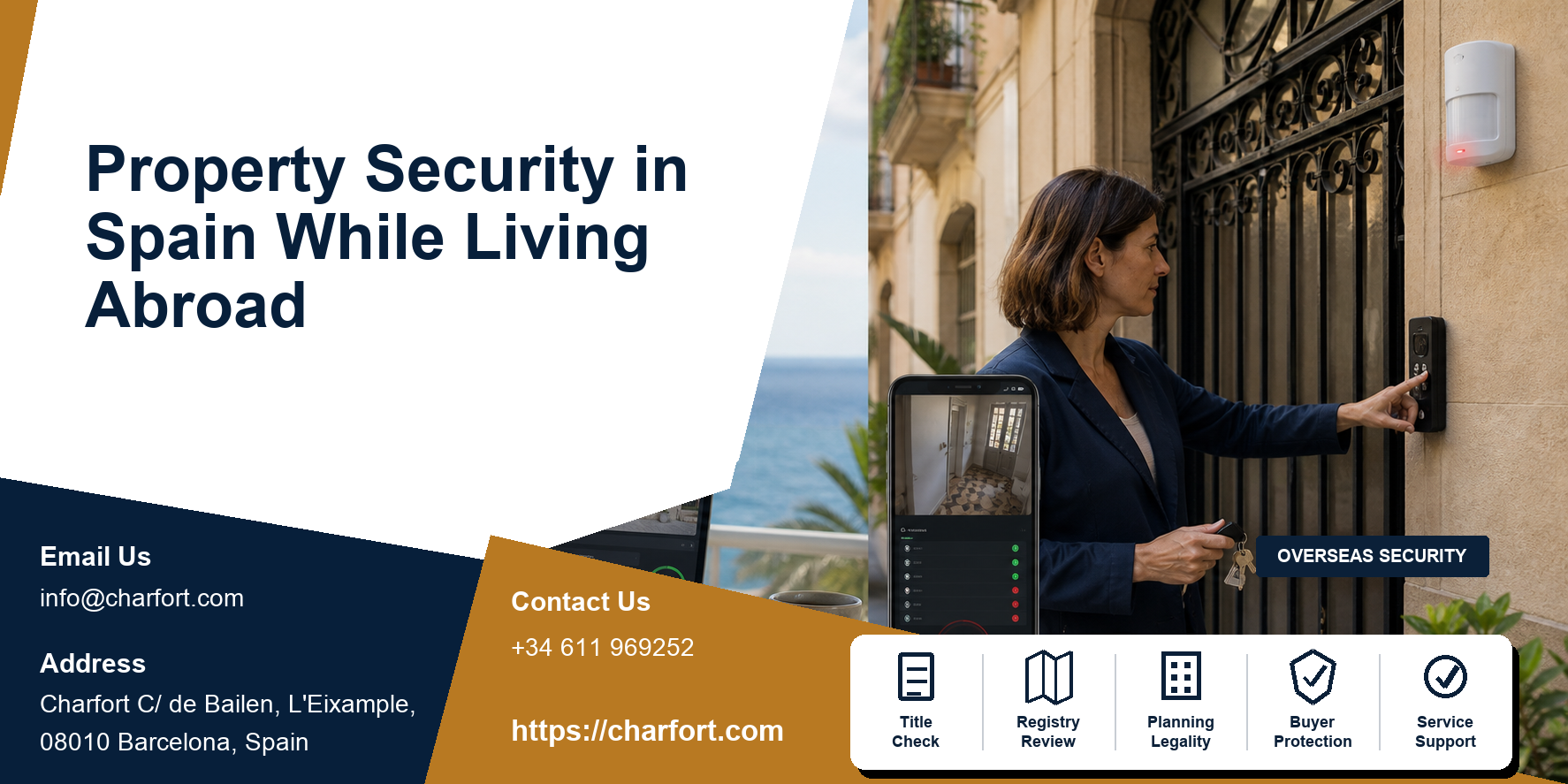
Property Security in Spain While Living Abroad requires more than installing one device or buying one policy. A useful protection plan connects the property’s physical condition, occupancy pattern, insurance terms, community setting, local contacts and emergency response.
Foreign owners face an additional control problem: warning signs may appear while nobody with authority is present. The practical objective is to reduce avoidable incidents, detect material changes early, and give a trusted person the information and authority needed to respond without improvising.
Use physical access controls, a complete key and code register, proportionate detection, a monitored or trusted local verification path, documented inspections and a written incident protocol. Test what happens when power, internet, an app or the first responder fails, and keep remote-device accounts protected.
The focus here is ongoing remote security operations. Device architecture is covered in Smart Home Monitoring, alarm selection in Home Security Systems, vacancy preparation in Protecting a Vacant Holiday Home, and occupation response in Practical Okupa Precautions.
Control Every Route into the Property
List physical keys, remotes, access cards, alarm codes, smart-lock accounts, community keys, garage controls and contractor access. Assign each item, record return and change credentials after loss, staff change or unexplained access.
Do not depend on a hidden key or one person living far away. Store backup access securely and ensure the responder can identify themselves and the property authority when necessary.
Make Alerts Actionable
An alert needs a responsible recipient, verification route, escalation threshold and fallback. Configure meaningful events rather than overwhelming recipients with routine motion or repeated technical faults.
Test alerts in real conditions, including night, shuttered rooms, router restart and mobile roaming. Confirm that contact details remain current with alarm companies and community administrators.
Protect the Monitoring System Itself
Change default credentials, use unique passwords and multi-factor authentication where available, update firmware and remove former users. Limit camera views to lawful private areas and respect data-protection and community rules.
INCIBE advises treating connected devices as computers with security and privacy risks. A compromised device can expose images, occupancy patterns or network access, so procurement should consider support and update policy as well as features.
Govern the Local Response
Define what the contact may inspect, photograph, spend and authorise. Require incident reports with time, observation and action. Personal safety comes first; responders should contact police, 112 or qualified contractors rather than confront people or handle dangerous systems.
Review performance after every alert. Repeated false alarms, missed reports or unavailable responders indicate that the system needs redesign, not that alerts should simply be ignored.
Property Protection Decision Table
Use this table to separate routine action from the point at which the owner should obtain provider, community, technical or legal confirmation.
| Owner decision | Practical control | Escalate when |
|---|---|---|
| Access | Named key/code register and revocation | Key, code or account is lost or unexplained |
| Alarm | Named verification and escalation chain | Entry, smoke, water or personal risk cannot be ruled out |
| Camera | Private lawful field, secure account and retention | Common/public areas or personal monitoring is involved |
| Inspection | Dated route and exception report | Condition differs or visit is missed |
| System failure | Power, mobile and human fallback | Remote access cannot be restored safely |
Record the decision, date, responsible person and supporting document. A recurring ownership task is easier to manage when the next review point is visible rather than held in one person’s memory.
Apply the Guidance to Your Property
Start with the facts of the actual home rather than a generic Spain-wide assumption. Record the autonomous community and municipality, property type, age, construction, current use, normal vacancy period, community setting and any relevant renovation or incident history. Apartment owners should identify which systems and surfaces are private and which are common. Detached-home owners should include boundaries, roofs, drainage, external equipment and access. These facts determine which part of the guidance requires provider, community, technical or legal confirmation.
Use current written evidence whenever the decision can affect safety, legality, insurance, cost or later sale. That may include a contract, policy schedule, municipal response, community resolution, technical report, meter record, dated photograph, invoice or professional advice. A verbal explanation can help identify the next question, but it should not be treated as final authority where a document or formal confirmation should exist. Keep the evidence with the property reference and decision date so another authorised person can understand it without reconstructing the conversation.
When quotations or service proposals are required, give each provider the same property information and scope. Compare identity, responsibility, exclusions, timing, access, insurance, taxes, additional services, cancellation and the evidence delivered at completion, not only the headline price. If the offers are materially different, first test whether they are pricing the same work. A cheap proposal that omits a permit, inspection, regulated specialist, emergency response or close-out document may expose the owner to a larger later cost.
Finally, decide who will perform the action, who may approve changes, who verifies completion and when the next review occurs. The level of control should be proportionate: a routine account check does not need the same governance as structural work or a suspected security incident. Even so, every recurring task benefits from a named person, a due date, a completion record and a clear escalation point. This approach lets an overseas owner delegate practical work while retaining informed control of the property.
How to Handle Remote Security For Spanish Property
A foreign owner can use the following sequence to keep the task controlled:
- Inventory physical and digital access.
- Strengthen vulnerable doors and windows.
- Select proportionate detection and monitoring.
- Appoint primary and backup local responders.
- Write authority, spending and safety limits.
- Secure accounts and update devices.
- Test alert, outage and police-contact scenarios.
- Review logs and revoke obsolete access.
The sequence should be adapted to the property and locality. Urgent safety, water, fire, security or legal issues should be escalated immediately rather than waiting for the next scheduled review.
Owner Checklist and Records
Keep the following information available to the owner and any authorised local contact:
- Key, code and device-account register.
- Responder identification and authority.
- Property address and access notes.
- Alarm and monitoring contract.
- Inspection and alert logs.
- Police, 112, insurer and community contacts.
- Device recovery and credential record.
Store current working copies securely and keep irreplaceable originals protected. Access should be limited to the people who need the information for the authorised task.
Risks and Decision Points
The following warning signs justify clarification, a second quotation or professional review:
- Former contractors retain codes.
- Only one responder is available.
- Camera views cover common areas without review.
- Default passwords remain active.
- False alarms are routinely dismissed.
- A responder is expected to confront intruders.
A pause is usually less expensive than correcting unauthorised work, uninsured damage, an avoidable service interruption or a decision made without the community or municipality.
Foreign-Owner Scenario
A Canadian owner manages a Madrid apartment from Toronto. The home has reinforced entry hardware, a monitored alarm, a water sensor and a monthly inspection. Two local responders have separate logged access, while contractor codes expire after each visit. A router failure is identified because the monitoring plan distinguishes internet loss from intrusion and triggers a physical check during daylight.
The scenario is illustrative. The correct action can depend on the autonomous community, municipality, building, community rules, property type, insurer, service contract and the owner’s personal circumstances.
Continue the Ownership Journey
Build the system through Home Security Systems, Smart Home Monitoring and Vacant Holiday Home Protection. For wider administration, continue to Managing Property from Abroad.
How Charfort Can Help
Charfort can help define access records, local response and professional coordination through its Spain property coordination service.
Charfort can coordinate ownership information and professional work, but it does not replace a property lawyer, architect, technical architect, engineer, insurer, security company, utility provider, tax adviser or emergency service.
Official Sources and Review Note
The following primary or official sources were checked for this article. Municipal procedures, provider requirements, insurance terms, community rules and regional programmes can change, so owners should verify the current position for the property.
- Spanish Ministry of the Interior: home burglary prevention
- Spanish Data Protection Agency: video surveillance guidance
- INCIBE: security and privacy for connected-home devices
- Spanish Government: 112 emergency number
*Last reviewed 2026-07-29. This article provides general information and does not replace advice based on your personal, legal, technical, tax, insurance or financial circumstances.*
Frequently Asked Questions
Can I monitor a Spanish home entirely from abroad?
You can monitor many signals, but a reliable local verification and emergency path is still necessary.
Who should receive alarm alerts?
Named people who understand verification, safety and escalation, with backups for absence.
Can cameras view communal areas?
Video surveillance must respect data-protection and community rules; obtain specific advice before covering shared space.
How should contractor access be managed?
Use time-limited or separate access where possible and record issue, use and revocation.
What if the internet fails?
The plan should distinguish connectivity failure and provide mobile, monitored or physical fallback.
How often should access be audited?
After each occupant or contractor change and through a scheduled periodic review.
Conclusion
Remote security succeeds when access is accountable, alerts lead to verified action, systems have fallbacks and local responders operate within safe written limits. Technology supports that structure; it does not replace it.