
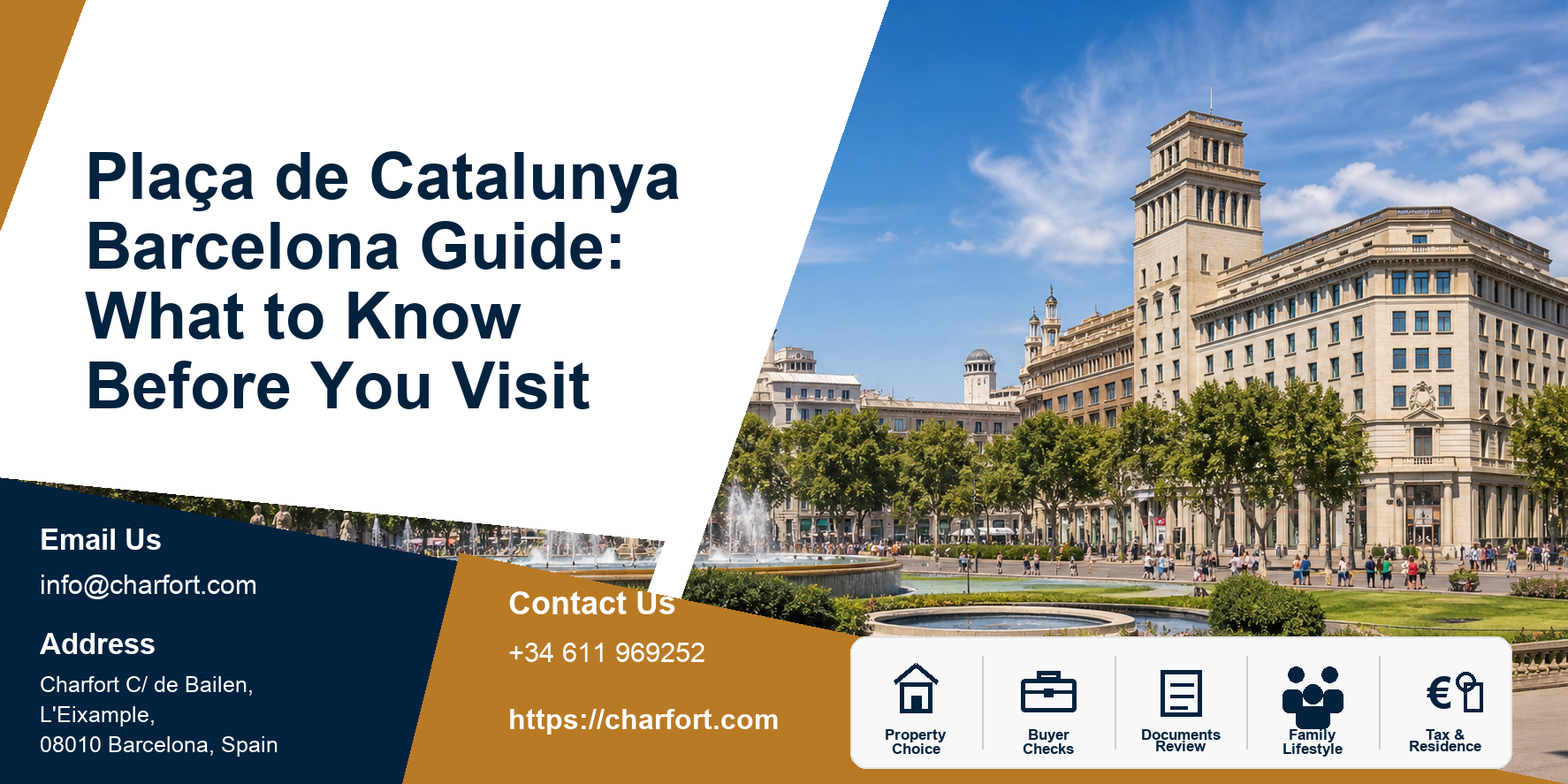
Plaça de Catalunya Barcelona is the central square linking the old city and Eixample. Barcelona Turisme describes it as a favorite meeting point and one of the city’s nerve centers.
It is not a quiet square, but it is one of the most useful places for first-time visitors to understand Barcelona’s layout.
| Topic | Practical answer |
|---|---|
| Best for | Orientation, transport, shopping, meeting point |
| Size | About 5 hectares, according to Barcelona Turisme |
| Nearby | La Rambla, Passeig de Gràcia, Gothic Quarter |
| Main tip | Use it as a starting point, not the whole visit |
Key Takeaways
- Plaça de Catalunya Barcelona is a useful stop for first-time visitors who want to understand Barcelona beyond a quick photo.
- The best visit usually combines the main site with nearby streets, parks, museums, or viewpoints.
- Public transport is normally easier than driving in central Barcelona.
- Visitors should check official opening times or event schedules when the site includes paid access, museums, or seasonal services.
- Charfort can help clients move from visitor planning to residence, tax, and property planning in Barcelona.
History and Why It Matters
The square was inaugurated in 1927 and covers about 5 hectares, according to Barcelona Turisme. It became a central meeting point, transport hub, and symbolic edge between historic and modern Barcelona.
The value of Plaça de Catalunya Barcelona is not only visual. It helps visitors read the city. Barcelona’s landmarks often connect to major periods such as the medieval city, the 1888 Universal Exhibition, the 1929 International Exhibition, modernist expansion, neighborhood festivals, or post-industrial renewal.
For a visitor, that context makes the stop more useful. For a future resident or buyer, it also shows how different parts of Barcelona carry different identities, traffic patterns, housing markets, and daily rhythms.
Location and How to Get There
Plaça de Catalunya sits between La Rambla, Portal de l’Àngel, Passeig de Gràcia, Ronda de Sant Pere, and the Eixample edge. It is one of the easiest places to reach by metro, bus, rail, and airport connections.
The simplest travel rule is to use metro, bus, FGC, Rodalies, walking routes, or taxi depending on the time of day. Central Barcelona streets can be busy, and parking is rarely the easiest option for visitors.
A good plan is to choose one main destination, then build a short route around it. This prevents the day from becoming a rushed checklist.
What to See and Do
Visitors should focus on the details that make Plaça de Catalunya Barcelona different. Visitors should notice the fountains, sculptures, large open space, surrounding shopping streets, and how the square connects several Barcelona routes.
Useful things to do include:
- Take photos early or late in the day for better light.
- Walk the surrounding streets instead of leaving immediately.
- Check official visitor information before relying on old schedules.
- Bring comfortable shoes because Barcelona rewards walking.
- Leave time for a cafe, park, viewpoint, or museum nearby.
Best Time to Visit
Morning is easier for orientation. Late afternoon and weekends can be crowded. It is also a common starting point for tours and airport transfers.
Weekdays are often easier than weekends. Morning visits can be calmer, while late afternoon can give softer light. In summer, shade and water matter. In winter, visitors should check shorter daylight and event calendars.
Barcelona’s main tourist season can make even open public spaces feel crowded. A practical visitor plan leaves space between timed bookings.
Nearby Places to Add
Nearby stops include La Rambla, Portal de l’Àngel, Gothic Quarter, Passeig de Gràcia, Eixample, and the tourist information office.
This is one of the easiest ways to make a Barcelona visit feel richer. Instead of treating each stop as separate, visitors can connect sites by walking route, metro line, or neighborhood theme.
Practical Visitor Tips
Use Plaça de Catalunya as a practical hub. From here, visitors can walk to La Rambla, Gothic Quarter, Passeig de Gràcia, or Eixample. Keep belongings secure because central crowds can be dense.
For first-time visitors, the goal should be comfort and flexibility. Barcelona is dense enough that small changes in timing can make the day easier.
What This Area Says About Living in Barcelona
A visitor route can also reveal where a person might want to live. Some people prefer central streets and constant movement. Others prefer quieter residential districts, family areas, or neighborhoods with stronger property value stability.
Charfort often helps clients connect these impressions to real estate and residence planning. A person may love a landmark, but the better home may be several districts away.
How Charfort Helps Visitors Who Want to Move to Barcelona
Many people first discover Barcelona through places such as Plaça de Catalunya Barcelona. Later, the question becomes practical: which neighborhood should they live in, what visa route applies, what taxes could arise, and whether renting or buying makes sense.
Charfort helps visitors become informed residents or buyers by coordinating:
- Spain visa route planning through Spain immigration services.
- Property search and contract review through Spain real estate services.
- Buyer due diligence through buying property in Spain.
- Tax residence planning through Spain individual taxation support.
- Rental review through Spain rental support.
This matters because a favorite landmark is only one part of a successful Barcelona move. The legal route, tax timing, and housing decision should be planned together.
Quick Planning Checklist
Before visiting Plaça de Catalunya Barcelona, check:
- Current opening times or access rules.
- Nearest metro, bus, or rail stop.
- Weather and shade.
- Nearby attractions worth combining.
- Crowd levels if visiting in summer or during festivals.
- Whether the visit affects a larger relocation or property search plan.
Extra Relocation Context
For people who are visiting Barcelona before a possible move, Plaça de Catalunya Barcelona Guide: What to Know Before You Visit can also be used as a small lifestyle test. The visitor should notice how crowded the area feels, how easy transport is, whether nearby streets feel residential or tourist-heavy, and how quickly the atmosphere changes between morning and evening. Those details often say more about daily life than a single property viewing.
Charfort recommends separating the emotional reaction from the practical decision. A landmark may be beautiful, but the best neighborhood for a family, remote worker, retiree, or investor may be elsewhere. Before choosing a home base, clients should compare visa route, tax residence, rental budget, school needs, and property due diligence.
This is especially important in Barcelona because the city is compact. A person can live in a quiet district and still visit central attractions easily. The right plan balances access, comfort, legal status, and long-term costs.
Sources and Authority Notes
This guide uses current public references including Barcelona Turisme Plaça de Catalunya, Tourist information point, Barcelona City Council, Barcelona statistical data, TMB public transport information, Barcelona Turisme. Visitors and buyers should check current schedules, property data, and transport conditions before making final plans.
FAQs
1. Where is Plaça de Catalunya Barcelona?
Plaça de Catalunya Barcelona is in Barcelona, and visitors can reach it by public transport, walking routes, or nearby metro and bus connections depending on the exact starting point.
2. Is Plaça de Catalunya Barcelona worth visiting?
Yes. Plaça de Catalunya Barcelona is worth visiting for first-time visitors because it combines local history, easy access, and a strong sense of place within Barcelona.
3. How long should visitors spend there?
Most visitors should allow 30 minutes to two hours, depending on whether they only want photos or also plan to explore nearby streets, museums, parks, or viewpoints.
4. Is Plaça de Catalunya Barcelona family-friendly?
Yes. Plaça de Catalunya Barcelona can work well for families, although visitors should plan around crowds, weather, walking distance, and nearby rest areas.
5. What should first-time visitors know?
First-time visitors should check current opening times where relevant, use official transport information, avoid peak crowd periods when possible, and leave time for nearby attractions.
6. How can Charfort help people moving to Barcelona?
Charfort can help with Spain visa planning, tax residence, property search, rental or purchase review, and practical relocation support for people who want to turn a visit into a move.
Conclusion
Plaça de Catalunya Barcelona Guide: What to Know Before You Visit is more useful when visitors understand its history, location, and surrounding area. It can be a quick stop, but it can also become part of a deeper route through Barcelona’s neighborhoods, parks, viewpoints, and cultural life.
Charfort helps clients who want to go beyond visiting. With immigration, tax, property, and relocation planning, Charfort can help turn a Barcelona trip into a practical move or investment plan.