
Foreign buyers in Spain often see the property first and the risk file later. That is the wrong order. Due diligence is the structured verification process that shows whether the property being marketed can be legally sold, used, financed, occupied, renovated, or held without avoidable surprises. It matters before a reservation payment, before a deposit contract, and again before completion at the notary.
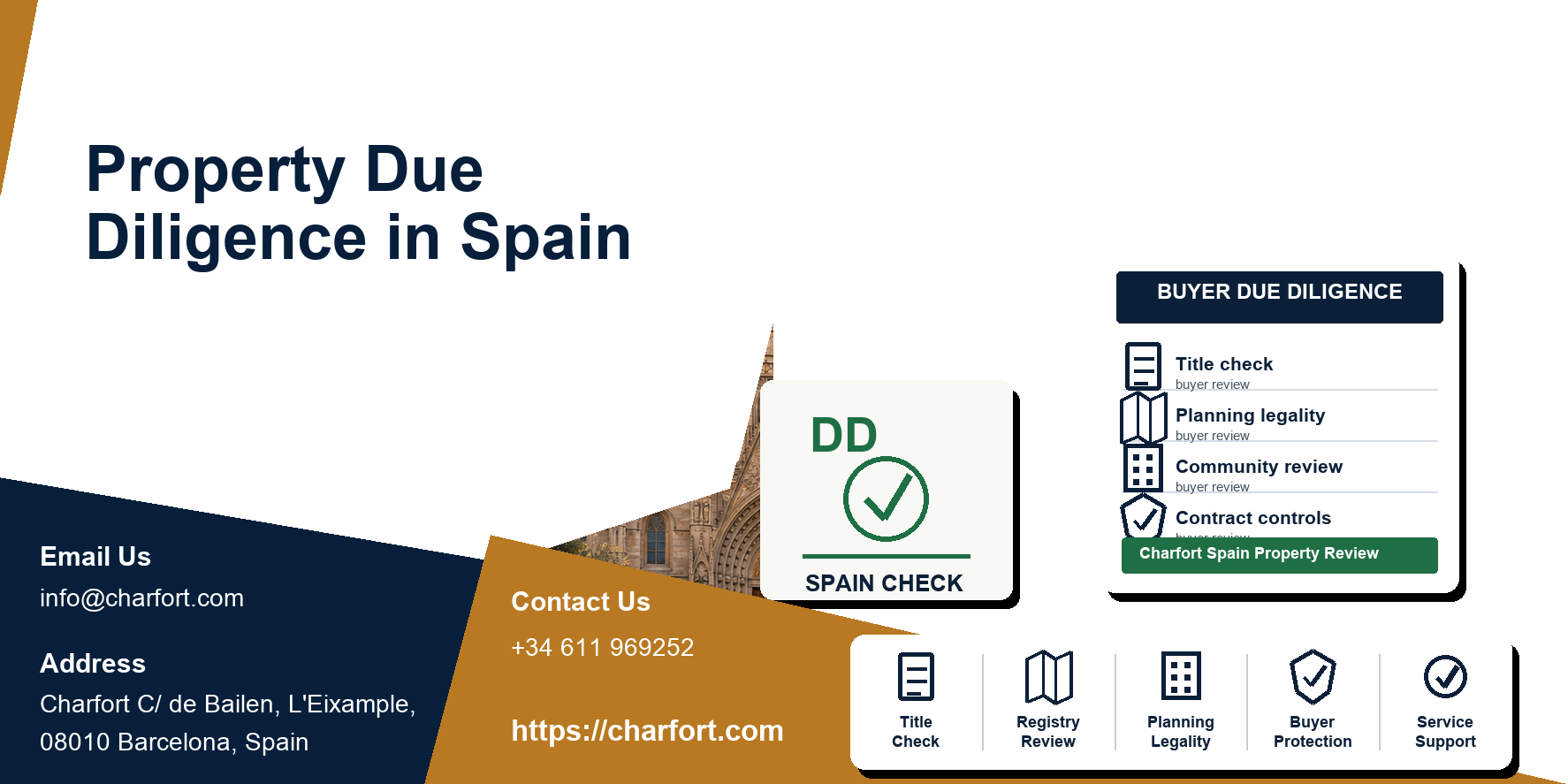
Property due diligence in Spain means verifying the legal, registry, planning, technical, financial, and community position of a property before the buyer becomes committed. Foreign buyers should check the registered owner, charges, cadastral consistency, planning legality, occupancy or habitability evidence, community debts, building condition, and contract risk before reservation, private contract, or completion.
What Spanish Property Due Diligence Owns
This checklist covers the verification journey. It intentionally does not try to become a full legal textbook for every document. The purpose is to show what must be checked, why it matters, what evidence is needed, and which specialist page should own the deeper explanation.
In a controlled purchase, the buyer should not treat the lawyer, agent, notary, bank, architect, and seller as separate information islands. Each source checks a different risk layer. The buyer’s task is to make those layers consistent before the next commitment.
Buyer Verification Workflow
| Check | Why it matters | Evidence to request | Specialist owner page |
|---|---|---|---|
| Title and registered owner | Confirms who can sell and whether the title has charges, liens, easements, embargoes, or annotations. | Current Nota Simple from the Land Registry. | Nota Simple guide |
| Registry and Cadastre match | Shows whether the legal property description and cadastral/map data are aligned enough for the transaction. | Nota Simple, cadastral certificate, plans, boundaries, built-area data. | Registry vs Cadastre guide |
| Planning legality | Confirms whether the building, use, extensions, terraces, pools, annexes, and renovations have planning support. | Municipal planning certificates, licences, architect reports, registry history. | Planning legality guide |
| Community of owners | Reveals debts, disputes, major works, restrictions, tourist-use pressure, and special assessments. | Community debt certificate, minutes, statutes, budgets, reserve status. | Community documents guide |
| Occupation and habitability | Supports legal occupation, utilities, mortgage review, and future resale confidence. | First occupancy licence, habitability certificate where required, utility evidence. | LPO guide and habitability guide |
When to Start the Checks
The safest time to start is before paying a reservation deposit. In practice, buyers often receive documents after they have already made an emotional decision. That increases pressure and reduces negotiating leverage.
At the viewing stage, ask whether the seller can provide a current Nota Simple, cadastral reference, IBI receipt, community status, energy certificate, occupancy or habitability evidence, renovation permits, and technical documentation. Before the private contract, your lawyer and technical adviser should have enough time to review the critical documents. Before completion, the file should be refreshed, especially the Land Registry and community debt position.
Red Flags That Should Pause the Purchase
- The seller cannot produce a current Land Registry extract; review the Nota Simple checks.
- The built area, boundaries, or use differ between the registry and cadastral records; see registry and cadastral discrepancies.
- The property includes an extension, enclosed terrace, annex, basement, pool, or rural structure with unclear licence history; see illegal extensions in Spain.
- The community has unpaid contributions, litigation, major works, or a special assessment; see community debts and special assessments.
- The property lacks first-occupation or habitability evidence where the region, municipality, bank, or utility provider expects it; check first occupancy licence and certificate of habitability.
- The seller asks for fast payment before documents are reviewed or contract conditions are negotiated.
Who Verifies What
A Spanish property lawyer normally reviews title, registry charges, contract wording, completion formalities, tax implications, and legal risk. A technical architect or surveyor reviews construction condition, measurements, works, defects, and the technical plausibility of the building. Municipal checks may be needed for planning legality, licences, and future works. The notary records the transaction but should not be treated as the buyer’s independent due-diligence team.
Charfort’s role is buyer-side coordination: organising the right checks, identifying missing evidence, keeping the transaction logic clear, and making sure the commercial decision reflects the risk file.
Due-Diligence Checklist Before Contract
- Confirm the seller’s identity and legal capacity to sell.
- Review the current Nota Simple for ownership, charges, and property description.
- Compare registry description, cadastral data, plans, measured area, and physical condition.
- Check planning legality for the building, use, extensions, and past renovations.
- Request community debt certificate, recent minutes, statutes, reserve position, and approved works.
- Check first-occupation, habitability, energy, utility, and occupancy evidence where relevant.
- Review technical inspection findings and decide whether price, contract conditions, or withdrawal are needed.
- Use contract clauses to allocate unresolved risk before paying a meaningful deposit.
How the Checks Work Together
The strongest due-diligence file is not a pile of disconnected documents. It is a consistency test. The buyer should be able to explain how the Land Registry description, cadastral reference, community documents, technical inspection, planning evidence and contract conditions all point to the same property and the same risk profile.
For example, a Nota Simple may show a clean title, while the Registry vs Cadastre comparison reveals an area mismatch. That mismatch may then lead to a planning legality check if the difference appears to come from an extension. If the property is in an apartment building, the Community of Owners review may add a separate layer: even a legally clean unit can carry building-level cost or use restrictions.
This is why the buyer’s sequence matters. Starting with one document and stopping there creates false confidence. A good buyer file asks whether every document supports the same transaction decision: proceed, proceed with conditions, renegotiate, delay, or withdraw.
Mortgage underwriting and property due diligence should progress together but remain independent. A lender may reduce or refuse finance because of valuation or security concerns, yet extra cash does not cure a title, planning or condition problem. The next-step analysis is covered in Mortgage Refused in Spain? and the risk controls for an unfinanced alternative are covered in Buying Property in Spain with Cash.
Transaction Stage Logic for Foreign Buyers
At reservation stage, the buyer usually needs enough evidence to know whether the property is worth taking off the market and whether the reservation document allows withdrawal if material issues appear. At private-contract stage, the buyer needs a much deeper answer because the deposit risk is usually higher. At completion, the buyer needs updated evidence, especially around registry charges, community debts and seller obligations.
Remote buyers should be stricter about sequencing because they may not notice practical inconsistencies during repeat visits. If a buyer is purchasing from abroad, Charfort usually treats document collection, technical inspection, lawyer review and commercial negotiation as one coordinated timeline. The aim is to avoid a situation where the buyer discovers a material issue after the deposit has already shifted negotiating leverage to the seller.
What a Complete Buyer File Should Let You Decide
A complete buyer file should answer more than whether the purchase is technically possible. It should let the buyer decide whether the price still makes sense, whether the contract should include conditions, whether the seller must correct anything before completion, whether finance or insurance could be affected, and whether the same issue may reduce resale value later.
For foreign buyers, this decision framework is especially important because local practice can be unfamiliar. A document may be normal in Spain but still require explanation. A missing document may be common in a specific region but still important for a specific buyer. The best due-diligence work turns local evidence into a clear commercial decision.
Buyer-agent checks should remain separate from specialist conclusions. The guide to what a buyer’s agent verifies defines that responsibility, while the offer-verification process explains the commercial decision gate before terms are submitted.
How Charfort Helps
Charfort helps foreign buyers turn property interest into a controlled acquisition process. Through buyer representation in Spain, Charfort can coordinate registry checks, document review, technical inspections, lawyer communication, negotiation evidence, and the decision points that should be resolved before reservation or completion.
Important Note
This article provides general information for foreign buyers and does not replace advice based on your personal, legal, tax or financial circumstances. Planning, registry, community and habitability outcomes can vary by autonomous community, municipality, property type and transaction facts.
FAQs
What is property due diligence in Spain?
It is the buyer-side verification of title, registry data, cadastral data, planning legality, community documents, technical condition, occupation evidence, debts, and contract risks before purchase commitments are made.
Should I do due diligence before paying a reservation deposit?
Ideally yes. If timing makes that impossible, the reservation document should protect the buyer and the deeper checks should happen before the private contract or any larger deposit.
Is the notary responsible for due diligence?
The notary has an important public function at completion, but foreign buyers should not rely on the notary as their only due-diligence protection. Independent legal and technical review is still needed.
What is the most important document to check first?
The current Nota Simple is usually the first legal title check, but it is not enough by itself. It should be compared with cadastral, planning, community, and technical evidence.
Can Charfort replace a Spanish property lawyer?
No. Charfort coordinates buyer representation, document collection, risk review, and professional communication, but legal conclusions should be reviewed by a qualified Spanish property lawyer.
What happens if a problem is found?
The buyer may request missing documents, renegotiate price, add contract conditions, require rectification before completion, delay the transaction, or withdraw if the risk is unacceptable.
Carry the Verified File Into Ownership
Due diligence evidence should remain useful after completion. Owners can use the purchase file to verify post-purchase Registry, Cadastre, community and municipal records, then preserve the resulting evidence through the Spanish property document-control guide.
Conclusion
Spanish property due diligence is a sequence, not a single document. The safest buyer file connects registry evidence, cadastral data, planning legality, community obligations, technical condition, and contract protection before money moves too far. Charfort helps foreign buyers keep that sequence disciplined and commercially useful.