
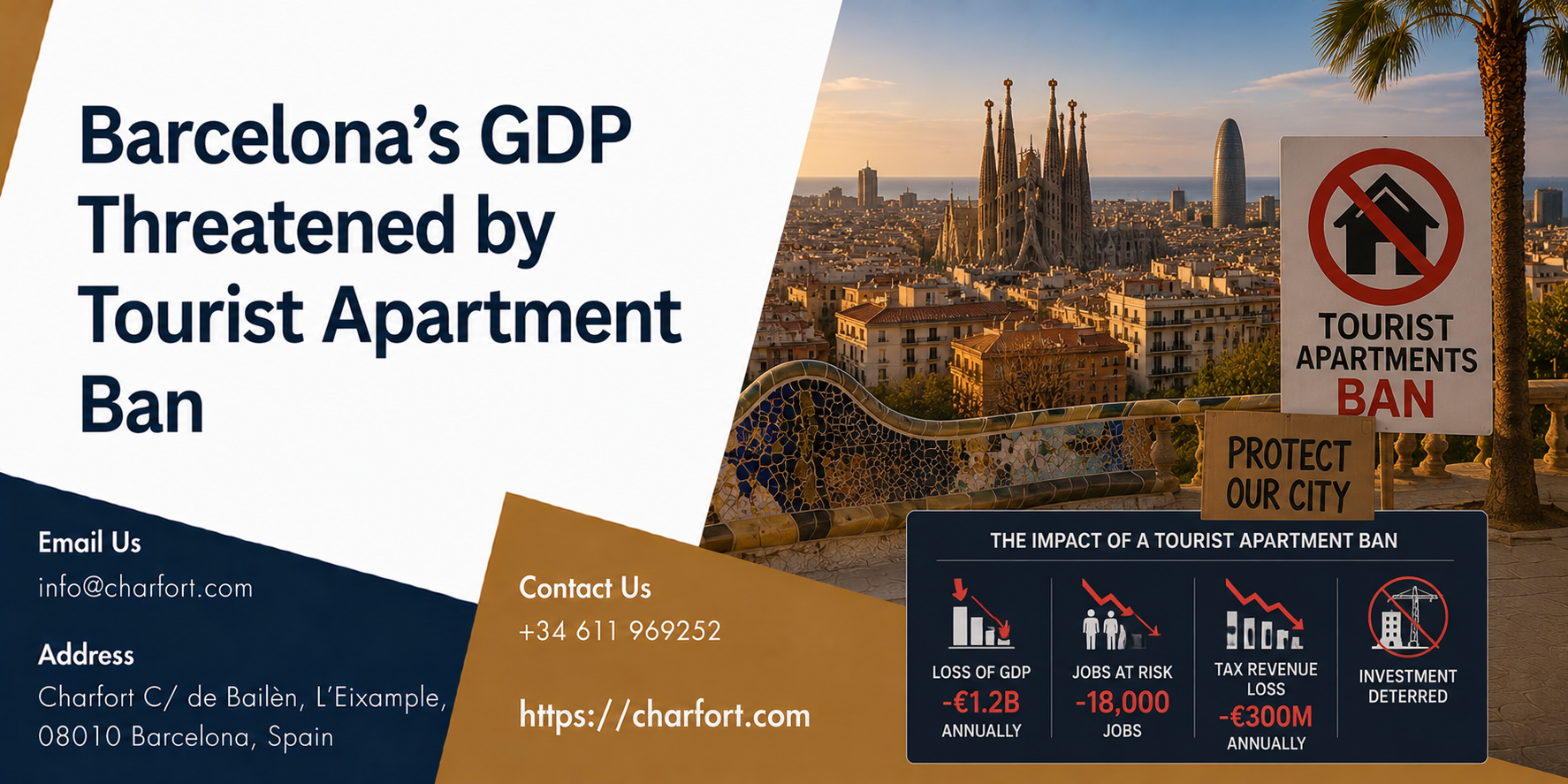
Barcelona’s vibrant economy faces a significant challenge. In 2026, a stark economic report revealed that the potential elimination of tourist apartments could directly threaten approximately 1.9% of Barcelona’s Gross Domestic Product (GDP). This figure highlights the substantial economic contribution of short-term rentals, a sector that has grown exponentially over the past decade. The city’s administration is grappling with balancing the needs of its residents, the demands of the tourism industry, and the overall economic health of Barcelona. Understanding the intricate relationship between tourist accommodation and the city’s economic output is crucial for informed policy decisions.
The economic impact of tourist apartments extends far beyond direct revenue. It encompasses job creation in hospitality, services, and related industries, as well as increased spending by tourists in local businesses such as restaurants, shops, and cultural attractions. A substantial reduction or outright ban on these accommodations could therefore trigger a ripple effect, impacting employment and business viability across multiple sectors. This article delves into the economic implications, explores the arguments surrounding the regulation of tourist apartments, and examines potential strategies for navigating this complex issue.
What is Barcelona’s GDP and Why is it Significant?
Barcelona’s Gross Domestic Product (GDP) represents the total monetary value of all finished goods and services produced within the city’s geographical boundaries in a specific time period. It serves as a primary indicator of the city’s economic health, size, and growth rate. In 2026, Barcelona’s GDP is a complex mosaic, fueled by diverse sectors ranging from tourism and services to technology and manufacturing. Understanding this economic engine is vital for assessing the potential fallout from policy changes affecting major industries like short-term rentals.
The significance of Barcelona’s GDP lies in its ability to reflect the overall prosperity and standard of living within the city. A growing GDP generally correlates with increased employment opportunities, higher wages, and greater public and private investment. Conversely, a declining GDP can signal economic stagnation or recession, leading to job losses, reduced consumer spending, and a potential decrease in public services. Therefore, any policy that could impact a significant portion of this GDP, such as the proposed restrictions on tourist apartments, warrants careful economic analysis. The 1.9% figure is not merely a statistic; it represents tangible economic activity, jobs, and revenue that underpin the livelihoods of many Barcelonians.
How Do Tourist Apartments Contribute to Barcelona’s Economy?
Tourist apartments contribute to Barcelona’s economy through several interconnected channels, creating a significant economic multiplier effect. Their presence fuels demand for a wide array of goods and services, generating revenue and employment opportunities. The direct income generated from rental bookings is just the beginning of their economic story. Tourists staying in apartments often spend more on local amenities and experiences compared to those in traditional hotels, as they are more integrated into residential neighborhoods.
Key economic contributions include:
- Direct Revenue Generation: Property owners and management companies earn income from renting out apartments to tourists. This revenue circulates back into the local economy through taxes, property maintenance, and personal spending.
- Job Creation: The management, cleaning, maintenance, and marketing of tourist apartments create numerous jobs. Additionally, the increased foot traffic in neighborhoods with a high concentration of tourist rentals supports local businesses.
- Support for Local Businesses: Tourists staying in apartments patronize local restaurants, cafes, shops, and cultural attractions, boosting the revenue of these establishments. This often happens in areas that might not be primary tourist hubs, distributing economic benefits more widely.
- Property Market Activity: The demand for properties suitable for tourist rentals can stimulate the real estate market, benefiting real estate agents, developers, and related service providers. This can include services for buying and selling properties, such as those offered by a professional buyer’s agent. For instance, navigating the complexities of acquiring property in Barcelona requires expert knowledge.
- Increased Tourism Spending: Tourists are a vital source of income for Barcelona. Short-term rentals provide accommodation options that cater to different preferences and budgets, thereby attracting a broader range of visitors and increasing overall tourism expenditure. The city’s appeal as a destination is enhanced by diverse accommodation choices.
- Infrastructure Utilization: Tourists utilize public transportation, local services, and amenities, contributing to their upkeep and development through taxes and fees, though this can also present challenges.
The economic ecosystem surrounding tourist apartments is complex and multifaceted. A report from 2026 indicated that this sector supports a considerable number of jobs, estimated to be in the tens of thousands, directly and indirectly. This makes the 1.9% GDP threat a significant concern for policymakers aiming to maintain economic stability.
What is the Economic Impact of Restricting Tourist Apartments?
Restricting tourist apartments in Barcelona could lead to a substantial negative economic impact, potentially affecting employment, business revenue, and overall GDP. The 1.9% GDP threat underscores the magnitude of this potential disruption. When the supply of tourist accommodation decreases, several economic consequences are likely to follow, creating a complex web of challenges for the city.
The primary impacts include:
- Reduced Tourism Revenue: A significant reduction in tourist apartments could lead to fewer tourists choosing Barcelona as a destination or staying for shorter periods, resulting in decreased overall tourism spending. This directly impacts the 1.9% GDP figure.
- Job Losses: The closure or restriction of tourist apartments would likely lead to job losses in property management, cleaning services, maintenance, and related support industries. This could affect thousands of workers.
- Business Closures: Restaurants, shops, and other local businesses that rely heavily on tourist patronage, particularly those located in areas with a high density of tourist rentals, could face significant revenue declines, potentially leading to closures.
- Decreased Property Market Activity: The demand for properties suitable for short-term rentals might decrease, impacting real estate agents and developers. This could also affect property values in certain areas.
- Shift to Alternative Accommodation: While some tourists might shift to hotels, others might opt for destinations with more flexible accommodation options. This could lead to a loss of market share for Barcelona.
- Potential for a Black Market: Overly strict regulations could inadvertently drive some operations underground, making them harder to monitor and tax, and potentially leading to exploitative practices.
The economic analysis conducted in 2026 highlighted that the interconnectedness of the tourism sector means that a restriction on one type of accommodation can have far-reaching effects. For instance, a decrease in tourist numbers impacts not only accommodation providers but also airlines, tour operators, and cultural institutions. The challenge lies in finding a regulatory balance that addresses resident concerns without causing undue economic harm.
What Are the Arguments For and Against Tourist Apartments?
The debate surrounding tourist apartments in Barcelona is multifaceted, involving passionate arguments from various stakeholders, including residents, tourism operators, property owners, and city administrators. These arguments often center on economic benefits versus social and residential impacts. Understanding these differing perspectives is crucial for appreciating the complexity of the policy decisions.
Arguments For Tourist Apartments:
- Economic Engine: Proponents emphasize the significant economic contributions, including GDP growth, job creation, and increased spending in local businesses, as highlighted by the 1.9% GDP figure. They argue that restricting this sector would harm Barcelona’s economy.
- Tourism Diversity: Tourist apartments offer diverse accommodation options, catering to various traveler needs and budgets, which can attract a wider range of tourists and extend the tourism season.
- Revenue for Property Owners: For many property owners, tourist rentals provide a valuable source of income, helping them pay mortgages, maintain their properties, and supplement their earnings. This is particularly relevant for individuals seeking to invest in property.
- Neighborhood Revitalization: In some cases, tourist apartments can lead to the renovation and upkeep of properties in previously neglected areas, contributing to neighborhood improvement.
- Flexibility and Choice: They offer travelers more flexibility, allowing for longer stays, self-catering options, and a more “local” living experience.
Arguments Against Tourist Apartments:
- Housing Affordability Crisis: Critics argue that the proliferation of tourist apartments removes long-term rental properties from the market, driving up rents and making housing unaffordable for residents. This is a primary concern for many locals.
- Neighborhood Disruption: High concentrations of tourist rentals can lead to increased noise, waste, and a general disruption of the residential character of neighborhoods, impacting the quality of life for permanent residents.
- Strain on Public Services: An influx of temporary residents can place additional strain on public services like waste management, public transport, and security without a proportional increase in tax contributions from those specific units.
- Unfair Competition: Some argue that tourist apartments operate with fewer regulations and lower costs than traditional hotels, creating an uneven playing field.
- Erosion of Local Culture: The constant turnover of visitors can dilute the authentic cultural fabric of neighborhoods and create a “tourist bubble” effect.
The tension between these arguments is at the heart of Barcelona’s regulatory challenges. Policymakers must weigh the economic benefits against the social costs and seek solutions that promote sustainable tourism and protect residents’ quality of life.
How Does Regulation Affect Tourist Apartments and the Economy?
The regulatory framework surrounding tourist apartments significantly influences their operation, economic impact, and the overall stability of Barcelona’s economy. In 2026, Barcelona has implemented various measures to manage the sector, aiming to mitigate negative externalities while preserving economic benefits. The effectiveness and stringency of these regulations directly correlate with the potential threat to the city’s GDP.
- Licensing and Permits: Requiring licenses for tourist apartments ensures a minimum standard of safety and legality. However, overly complex or restrictive licensing processes can stifle legitimate businesses and encourage illegal operations. A well-managed licensing system can help track the number of units and their distribution.
- Zoning and Density Limits: Implementing zoning laws and density limits can prevent over-concentration of tourist apartments in residential areas. This helps maintain neighborhood character and reduces the strain on local infrastructure. However, strict limits can reduce the overall supply, potentially impacting tourism revenue.
- Taxation: Imposing tourist taxes on short-term rentals, similar to hotel taxes, ensures that this sector contributes financially to the city’s services and infrastructure. Fair and consistent taxation is crucial for economic fairness and revenue generation.
- Duration Limits: Capping the number of days a property can be rented out as a tourist accommodation per year can help ensure that properties remain primarily for residential use, thus alleviating housing pressure.
- Enforcement: Robust enforcement mechanisms are critical to ensure compliance with regulations. Without effective enforcement, rules become meaningless, and illegal operations can thrive, distorting the market and undermining legitimate businesses.
The economic impact of these regulations is a delicate balancing act. Stricter regulations, while potentially beneficial for residents, might reduce the number of available tourist units, thus impacting the 1.9% GDP contribution. Conversely, lax regulations can exacerbate social problems and lead to unsustainable tourism growth. The city’s strategy in 2026 involves continuous monitoring and adjustment of these regulations to find an optimal equilibrium. For example, understanding What Services Do Buyer’s Agents Offer in Spain? can be crucial for property owners navigating these regulations.
What is the Role of Hotels vs. Tourist Apartments in Barcelona’s Economy?
Both hotels and tourist apartments play distinct yet complementary roles in Barcelona’s tourism economy. While hotels offer traditional hospitality services, tourist apartments provide a different type of accommodation experience. Understanding their respective economic contributions and market positions is essential for a comprehensive economic analysis.
Hotels:
- Economic Contribution: Hotels are significant contributors to Barcelona’s GDP through direct revenue, employment, and substantial tax contributions. They often employ a larger, more permanent workforce compared to the fragmented management of many apartment rentals.
- Service Standards: Hotels typically offer a standardized level of service, including daily cleaning, reception, and amenities like restaurants and conference facilities.
- Regulation: Hotels operate under established hospitality regulations, ensuring a consistent level of quality and safety.
- Target Market: They often cater to business travelers, package tourists, and those seeking full-service accommodation.
Tourist Apartments:
- Economic Contribution: As previously discussed, tourist apartments contribute significantly to GDP, especially through property owners and related service providers. Their economic impact is widespread, often benefiting smaller businesses and local economies within neighborhoods.
- Flexibility and Experience: They offer greater flexibility, self-catering options, and a more immersive experience for travelers, particularly families and longer-stay visitors.
- Regulation: The regulatory landscape for tourist apartments has been more dynamic and often less stringent than for hotels, though this is changing.
- Target Market: They appeal to independent travelers, budget-conscious tourists, and those seeking a “home away from home” experience.
The relationship between hotels and tourist apartments is often debated. Some argue that apartments offer competition that can drive down prices and improve services across the board. Others contend that apartments, especially when unregulated, can undermine the traditional hotel sector and contribute to over-tourism. In 2026, Barcelona’s economic strategy must consider how to foster a balanced ecosystem where both sectors can thrive responsibly, contributing to the city’s overall economic vitality without compromising residents’ well-being. The benefits of a Real Estate Personal Shopper in Spain can be valuable for investors looking at different property types within this dynamic market.
What is the Current Regulatory Landscape for Tourist Apartments in Barcelona (2026)?
In 2026, Barcelona continues to navigate a complex and evolving regulatory landscape for tourist apartments, striving to balance economic benefits with the need to protect residents and maintain the city’s livability. The city administration has implemented a series of measures designed to control the growth and impact of short-term rentals. These regulations aim to curb the negative externalities associated with the sector, such as rising housing costs and neighborhood disruption.
Key aspects of the current regulations include:
- Strict Licensing Requirements: Obtaining a license for a tourist apartment in Barcelona is a rigorous process. The city has significantly limited the number of new licenses issued, particularly in central areas experiencing high tourism density. Properties must meet specific safety, habitability, and zoning requirements.
- Zoning Restrictions: The city employs zoning regulations to restrict the establishment of new tourist apartments in certain areas, especially those already saturated with tourism infrastructure or designated as primarily residential. This aims to prevent the displacement of residents and preserve neighborhood character.
- Tourist Tax Collection: Barcelona actively collects a tourist tax from all paying guests, including those staying in tourist apartments. This revenue is earmarked for reinvestment in tourism infrastructure, public services, and cultural heritage preservation. In 2026, this tax remains a significant source of municipal funding.
- Enforcement and Fines: The city has intensified enforcement efforts against illegal tourist apartments. Fines for non-compliance can be substantial, and authorities are actively working to identify and shut down unlicensed properties. This includes inspections and leveraging technology to monitor online listings.
- Focus on Residential Areas: Regulations increasingly prioritize ensuring that tourist apartments do not significantly impact the availability or affordability of long-term housing for residents. Measures often aim to limit the conversion of primary residences into full-time tourist accommodations.
- Data Monitoring: The city administration continuously monitors data related to tourist accommodation, including occupancy rates, average prices, and the number of licensed versus unlicensed properties. This data informs policy adjustments and enforcement strategies.
Despite these efforts, challenges persist. The existence of unlicensed apartments remains a concern, and the economic pressure to convert properties for short-term rental continues. The ongoing dialogue between residents, industry stakeholders, and the city council shapes the evolution of these regulations. The goal is to foster a sustainable tourism model that benefits the entire city, not just a select few.
How Can Barcelona Mitigate the Economic Threat While Addressing Resident Concerns?
Barcelona faces the critical challenge of mitigating the potential 1.9% GDP threat posed by restricting tourist apartments while simultaneously addressing legitimate concerns of its residents. This requires a nuanced, multi-pronged strategy that balances economic imperatives with social equity and urban sustainability. Simply banning tourist apartments could cause significant economic harm, but unchecked growth is unsustainable.
Effective mitigation strategies could include:
- Strategic Regulation, Not Outright Bans: Instead of complete elimination, focus on smart regulation. This involves:
- Targeted Zoning: Allow tourist apartments in designated commercial or mixed-use zones, while strictly limiting them in purely residential areas.
- Caps on Density: Implement limits on the number of tourist apartments per building or per block to prevent over-saturation.
- License Quotas: Maintain strict quotas on the total number of licenses, focusing on quality and compliance rather than quantity.
- Strengthening Enforcement: Invest in robust technology and personnel to identify and penalize illegal tourist apartments effectively. This ensures fair competition and prevents the underground economy from flourishing. Consistent enforcement legitimizes the regulated sector.
- Promoting Alternative Tourism Models: Encourage and support diverse tourism offerings that spread economic benefits more widely and reduce pressure on specific neighborhoods. This could include promoting cultural tourism, business tourism, and longer-stay visitor segments.
- Supporting Affected Businesses and Workers: Develop programs to assist property owners and workers who might be negatively impacted by stricter regulations. This could involve retraining initiatives or support for transitioning to long-term rental markets.
- Investing Tourist Tax Revenue Wisely: Ensure that revenue generated from tourist taxes is transparently reinvested in improving public services, infrastructure, and affordable housing initiatives. This demonstrates the tangible benefits of tourism to residents.
- Fostering Dialogue and Collaboration: Maintain open communication channels between the city council, residents’ associations, and the tourism industry. Collaborative solutions are more likely to be sustainable and widely accepted.
- Encouraging Long-Term Rentals: Implement policies that incentivize property owners to offer long-term rentals rather than short-term tourist lets. This could include tax benefits or simplified administrative processes for long-term leases. Addressing the complexities of Breach Of Deposit Contract can be part of creating a more stable long-term rental market.
By implementing such a balanced approach, Barcelona can aim to preserve its economic vitality, estimated at 1.9% of GDP from this sector, while improving the quality of life for its residents and ensuring a more sustainable tourism future.
What are the Long-Term Economic Implications for Barcelona?
The long-term economic implications for Barcelona, stemming from its approach to tourist apartments, are profound and multifaceted. The decisions made in 2026 and the coming years will shape the city’s economic trajectory for decades. A strategy that overly restricts the sector risks economic stagnation, while a laissez-faire approach could lead to social instability and long-term damage to the city’s appeal.
Key long-term considerations include:
- Economic Diversification: Over-reliance on tourism, even with its significant GDP contribution, can make Barcelona vulnerable to external shocks (e.g., global pandemics, economic downturns). A long-term strategy should focus on fostering other high-value economic sectors, such as technology, research, and creative industries, to build resilience.
- Sustainable Tourism Model: Developing a sustainable tourism model is crucial. This means attracting responsible tourists who contribute positively to the local economy and culture, rather than mass tourism that strains resources and alienates residents. This could involve promoting niche tourism like sustainable travel or educational tourism.
- Housing Market Stability: The long-term availability and affordability of housing directly impact the city’s attractiveness to skilled workers, families, and businesses. A stable housing market is essential for sustained economic growth. Policies affecting tourist apartments must align with broader housing strategies.
- Brand Image and Competitiveness: Barcelona’s brand as a desirable place to live, work, and visit is a valuable economic asset. Policies perceived as overly restrictive or chaotic can damage this image, deterring investment and talent. Conversely, managing tourism effectively can enhance the city’s reputation.
- Infrastructure Development: Sustained tourism growth requires continuous investment in infrastructure – transport, utilities, public spaces. The revenue generated from tourism, including tourist taxes, must be strategically reinvested to support this development and ensure the city can cope with visitor numbers. The process of Changing Ownership Of Housing Supplies might need streamlining to support diverse housing models.
- Innovation in Hospitality: The long-term success of Barcelona’s tourism sector depends on its ability to innovate. This includes adopting sustainable practices, leveraging technology for better visitor experiences, and developing unique, high-quality offerings that differentiate it from competitors.
Ultimately, Barcelona’s long-term economic health hinges on its ability to create an environment where both residents and visitors can thrive. This requires a forward-thinking approach that integrates economic development, social well-being, and environmental sustainability. The city’s economic future, including the 1.9% GDP factor, depends on finding this intricate balance.
What is the Projected Economic Growth of Barcelona’s Tourism Sector?
Projecting the economic growth of Barcelona’s tourism sector in 2026 and beyond involves considering various factors, including global travel trends, economic conditions, and the effectiveness of the city’s regulatory policies. While the sector contributes significantly to the GDP, its growth trajectory is not guaranteed and is subject to change.
Several elements influence future growth:
- Global Travel Trends: Post-pandemic recovery has seen a resurgence in travel, but preferences are shifting towards sustainable and experiential tourism. Barcelona’s ability to adapt its offerings will be key.
- Economic Climate: Global and national economic health directly impacts disposable income for travel. Economic downturns can lead to reduced tourism spending.
- Regulatory Impact: The stringency and enforcement of regulations on tourist apartments and other accommodation types will directly influence the supply and cost of lodging, thereby affecting visitor numbers and spending. A restrictive approach might slow growth, while a well-managed approach could foster sustainable growth.
- Competition: Other popular European destinations compete for tourists. Barcelona must maintain its unique appeal and competitive pricing.
- Infrastructure Investment: Continued investment in transportation, attractions, and public spaces is essential to maintain and enhance the visitor experience, driving repeat visits and positive word-of-mouth.
- Safety and Security: Perceptions of safety and security significantly influence travel decisions. Maintaining a safe environment is paramount for sustained tourism growth.
While specific growth percentages for 2026 are subject to ongoing economic analysis, the general trend indicates a desire for travel recovery. However, the nature of that growth is evolving. Barcelona aims for quality over quantity in tourism, focusing on higher-spending visitors and longer stays, potentially leading to slower but more sustainable economic growth from the sector. This focus helps mitigate the risks associated with over-tourism while still leveraging the economic benefits, including the contribution of the tourist apartment sector, albeit under stricter controls. The city’s approach to areas like Buy Apartment In Madrid Spain or Buying Property In Barcelona reflects a broader understanding of real estate market dynamics within Spain.
What is the Economic Multiplier Effect of Tourism in Barcelona?
The economic multiplier effect of tourism in Barcelona refers to the phenomenon where an initial spending by tourists generates subsequent rounds of spending throughout the economy, amplifying the total economic impact. The 1.9% GDP figure associated with tourist apartments represents the direct impact, but the multiplier effect significantly increases this overall contribution.
This effect works as follows:
- Direct Spending: A tourist staying in an apartment spends money on accommodation, food, transport, activities, and shopping.
- Indirect Spending: The businesses receiving this direct spending (e.g., restaurants, shops, tour operators) then spend a portion of that revenue on their own operations, such as purchasing supplies from local producers, paying wages to their employees, and investing in their businesses.
- Induced Spending: Employees who receive wages from these businesses then spend their earnings on goods and services within the local economy, further stimulating demand.
For example, a tourist paying €100 for a night in a tourist apartment generates direct revenue. The property owner might use part of this to pay for cleaning services (€20), who then pays their staff. The restaurant owner where the tourist dines receives €50 and uses €15 to buy fresh produce from a local market. The staff member from the cleaning service spends their wages on groceries and entertainment. Each transaction creates further economic activity.
Studies consistently show that tourism has a high multiplier effect in cities like Barcelona. While the exact multiplier varies depending on the sector and local economic structure, it is estimated that every euro spent directly by a tourist can generate an additional €0.50 to €1.50 or more in indirect and induced economic activity. This means the true economic contribution of tourism, including that from tourist apartments, is considerably larger than just the initial spending figures. This amplified impact underscores why policies affecting the sector, such as those related to tourist apartments, have such significant implications for Barcelona’s overall GDP.
How Does Barcelona Compare to Other Cities Regarding Tourist Apartment Regulations?
Barcelona’s approach to regulating tourist apartments is often viewed as one of the more stringent among major European cities. While many cities grapple with similar issues of housing affordability and over-tourism, Barcelona has taken a notably proactive stance in implementing controls.
- Amsterdam: Has implemented strict regulations, including limits on the number of days a property can be rented out, bans in certain areas, and increased taxes. They focus on protecting residential neighborhoods.
- Paris: Also has regulations in place, limiting rental periods and requiring registration. Enforcement has been a challenge, but the city actively seeks to curb the impact on long-term housing.
- Berlin: Has a more complex regulatory history, including a ban on subletting entire apartments for tourism, though this has faced legal challenges. The focus is on preserving housing stock for residents.
- Lisbon: Faced significant resident backlash due to rising rents attributed to tourism growth. Regulations have been tightened, including restrictions in certain historical centers and increased taxes.
- New York City: Has some of the strictest laws globally, effectively banning short-term rentals of less than 30 days for apartments where the host is not present, aimed at preserving the housing market.
Barcelona’s strategy, characterized by a tight cap on licenses, specific zoning restrictions, and robust enforcement efforts, places it at the forefront of cities actively trying to manage the disruptive potential of the short-term rental market. The city’s commitment to addressing the housing crisis, even at the potential cost of some tourism revenue (estimated at 1.9% of GDP), reflects a strong emphasis on residents’ quality of life. This comprehensive approach, while facing ongoing challenges, serves as a case study for other urban centers dealing with similar pressures. The complexities of property ownership and management in Spain are a constant consideration, whether one is looking to Sell Your Property In Barcelona or invest.
What Data Supports the 1.9% GDP Threat Calculation?
The calculation that eliminating tourist apartments threatens 1.9% of Barcelona’s GDP in 2026 is derived from detailed economic impact studies. These studies typically analyze the direct, indirect, and induced economic activities associated with the short-term rental sector. Authoritative sources, often commissioned by or shared with the city council, provide the underlying data.
Key data points and methodologies include:
- Direct Economic Output: This measures the total revenue generated by tourist apartment rentals, including booking fees and associated services. Data is often sourced from booking platforms, property management companies, and official tourism statistics.
- Employment Figures: Studies estimate the number of jobs directly supported by the sector (e.g., property managers, cleaners) and indirectly supported (e.g., in restaurants and shops frequented by tourists). This involves analyzing employment data within the tourism and hospitality industries.
- Tourism Spending Patterns: Research into how tourists staying in apartments spend their money compared to hotel guests. This includes data on spending in local retail, food services, cultural attractions, and transportation.
GDP Contribution Calculation: Economic models are used to translate this spending into a contribution to the city’s GDP. This involves applying standard economic accounting principles to aggregate the value added by the sector. For instance, if the total direct and indirect economic activity generated by tourist apartments is calculated to be €X billion, and Barcelona’s total GDP is €Y billion, the percentage is calculated as (X/Y) 100.
- Scenario Modeling: The “threat” is often based on scenario modeling, projecting the economic impact if a significant portion of the tourist apartment stock were removed from the market. This might involve analyzing the potential loss of revenue and jobs under different regulatory scenarios.
These economic assessments are typically conducted by independent economic research firms, university departments, or specialized consultancies. They utilize a combination of official statistics, industry data, and econometric modeling to arrive at figures like the 1.9% GDP impact. For example, a study might find that the sector directly and indirectly contributes €500 million to Barcelona’s economy, and if the city’s total GDP is €26 billion, this represents approximately 1.9%. The accuracy relies on the quality of data and the robustness of the economic models employed.
Conclusion
The potential threat to 1.9% of Barcelona’s GDP from eliminating tourist apartments underscores the significant economic role this sector plays. In 2026, the city finds itself at a critical juncture, needing to balance the economic benefits derived from tourism accommodation with the pressing need to ensure housing affordability and maintain the quality of life for its residents. While tourist apartments generate substantial revenue, create jobs, and support local businesses, their unchecked proliferation has demonstrably contributed to rising housing costs and altered neighborhood dynamics.
Barcelona’s regulatory approach, characterized by strict licensing, zoning restrictions, and robust enforcement, reflects a deliberate effort to manage these competing interests. The city’s strategy aims not necessarily at eradication but at controlled integration, ensuring that tourism development is sustainable and benefits the broader community. This involves leveraging tourist tax revenue for public services and infrastructure, fostering a diverse tourism economy, and prioritizing long-term housing solutions for residents.
The long-term economic health of Barcelona depends on finding a sustainable equilibrium. This means fostering an environment where tourism can thrive responsibly, contributing positively to the city’s GDP without exacerbating social inequalities or damaging its unique urban fabric. The ongoing evolution of regulations and policies will continue to shape this delicate balance, influencing Barcelona’s position as a leading global destination while safeguarding its identity as a vibrant home for its citizens. The city’s commitment to finding this balance is a testament to its forward-thinking urban planning and economic management.
Key Takeaways
- Significant Economic Contribution: Eliminating tourist apartments could threaten approximately 1.9% of Barcelona’s GDP in 2026, highlighting the sector’s economic importance through direct revenue, job creation, and support for local businesses.
- Complex Regulatory Environment: Barcelona employs strict regulations, including limited licensing, zoning restrictions, and active enforcement, to manage tourist apartments and mitigate negative impacts on residents.
- Resident Concerns: Key arguments against tourist apartments include their contribution to housing unaffordability, neighborhood disruption, and strain on public services.
- Economic vs. Social Balance: Policymakers face the challenge of balancing the economic benefits of tourism accommodation with the social imperative of providing affordable housing and maintaining residents’ quality of life.
- Sustainable Tourism Goal: Barcelona aims for a sustainable tourism model that prioritizes quality over quantity, ensuring long-term economic viability and cultural preservation.
- Multiplier Effect: The economic impact of tourism spending, including that from tourist apartments, is amplified through indirect and induced spending, significantly boosting the overall contribution to the city’s economy.
- Leading Regulatory Stance: Barcelona’s regulatory approach is among the strictest in Europe, serving as a model for other cities grappling with similar challenges.
Frequently Asked Questions
What is the primary economic argument for maintaining tourist apartments in Barcelona?
The primary economic argument for maintaining tourist apartments centers on their substantial contribution to Barcelona’s Gross Domestic Product (GDP), estimated at 1.9% in 2026. This sector generates significant revenue through direct rental income, creates numerous jobs in hospitality and related services, and stimulates spending in local businesses like restaurants and shops, thereby supporting the city’s overall economic vitality and employment.
How do tourist apartments affect housing affordability for Barcelona residents?
Tourist apartments are widely considered to negatively impact housing affordability for residents. By converting long-term rental properties into short-term tourist lets, they reduce the available housing stock for permanent residents. This decreased supply, coupled with high demand, drives up rental prices, making it increasingly difficult for locals to find affordable housing within the city.
What measures does Barcelona use to regulate tourist apartments?
Barcelona implements several key measures to regulate tourist apartments. These include a strict licensing system with limited new permits, zoning restrictions to control their density in residential areas, enhanced enforcement against illegal operations, and the collection of tourist taxes. The city aims to control the sector’s growth and mitigate its negative impacts on residents’ quality of life.
Could Barcelona lose significant tourism revenue if tourist apartments are eliminated?
Yes, eliminating tourist apartments could lead to a significant loss of tourism revenue. While the exact figure is subject to economic modeling, the estimated 1.9% threat to Barcelona’s GDP suggests a substantial economic impact. This loss would stem from reduced accommodation availability, potentially fewer tourist arrivals, and decreased overall tourist spending across the city.
How does Barcelona ensure tourist apartments contribute to the local economy beyond just rental income?
Barcelona seeks to ensure broader economic contribution through measures like the tourist tax, which funds public services and infrastructure improvements. Additionally, by regulating the sector and encouraging compliance, the city aims to ensure that jobs created are formal and that businesses operating legally contribute through taxes. The goal is to integrate the sector sustainably rather than allowing it to operate in a way that solely benefits property owners.
Are there successful examples of cities balancing tourism accommodation with resident needs?
Many cities are actively seeking this balance. For example, Amsterdam and Amsterdam have implemented caps on rental days, restricted areas, and increased taxes. While challenges remain, these cities demonstrate that regulatory frameworks can help manage the impact of short-term rentals. Barcelona’s own evolving regulations are part of this ongoing effort, aiming to create a model of controlled, sustainable tourism that benefits both visitors and residents.