
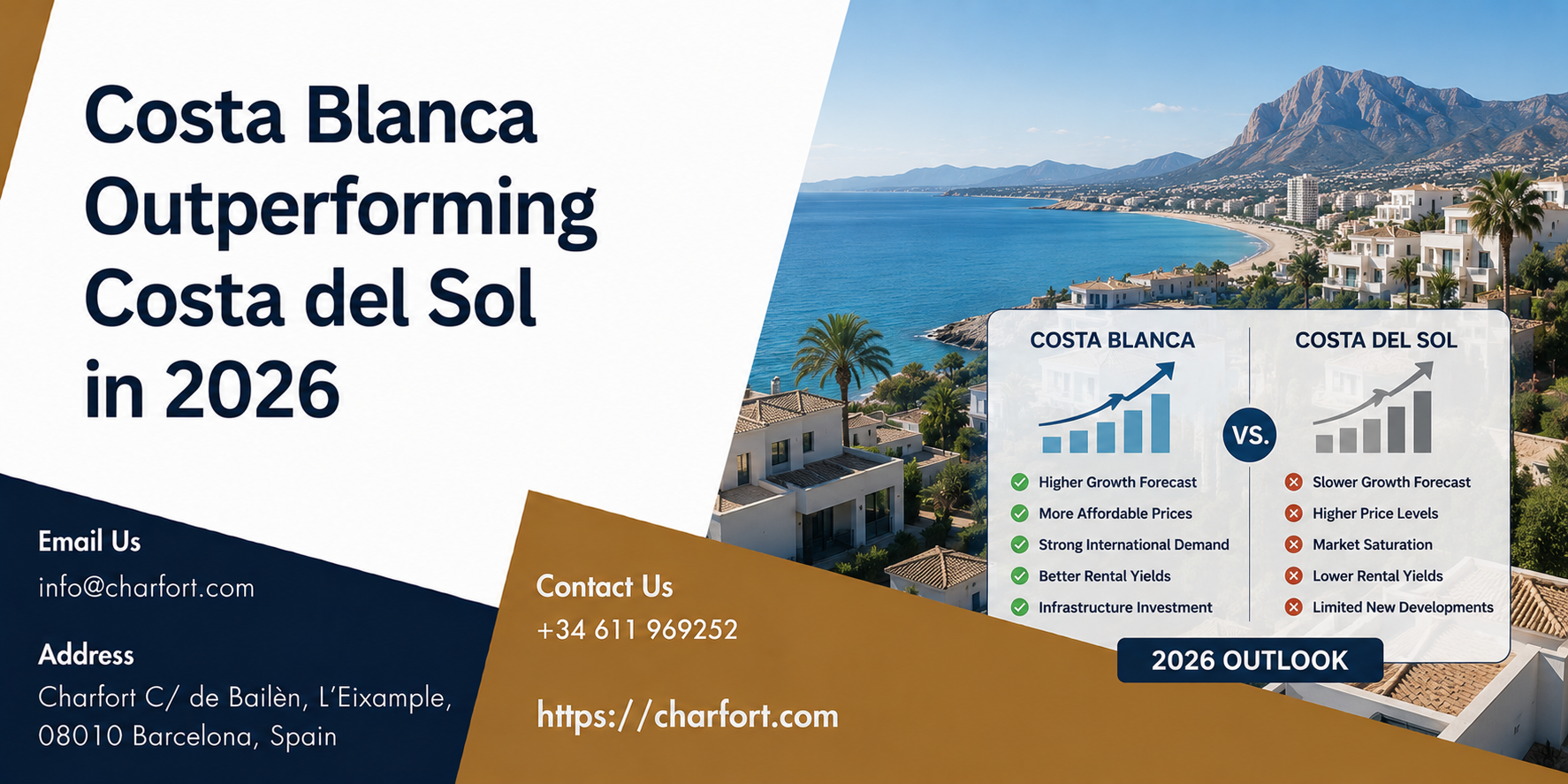
Did you know that property prices in the Costa Blanca region of Spain saw an average increase of 8.5% in the last year, while the Costa del Sol experienced a more modest 5.2% growth? This upward trend signals a significant shift in the Spanish property market, with the Costa Blanca emerging as a more dynamic and potentially lucrative investment destination in 2026. For years, the Costa del Sol has been the undisputed darling of property investors and holidaymakers seeking the Spanish sun. However, evolving market dynamics, changing lifestyle preferences, and strategic development initiatives are now positioning the Costa Blanca as the superior choice for those looking to buy, invest, or relocate. This article delves into the key factors driving this outperformance, examining everything from economic growth and infrastructure development to lifestyle appeal and investment potential.
The allure of Spain’s coastlines has always been strong, drawing people from across the globe. Both the Costa Blanca and the Costa del Sol offer sun-drenched beaches, vibrant cultures, and a desirable Mediterranean lifestyle. Yet, as 2026 unfolds, a closer look at market indicators, development trends, and buyer sentiment reveals why the Costa Blanca is increasingly capturing attention and outshining its southern counterpart. Understanding these nuances is crucial for anyone considering a property purchase or investment in Spain’s coastal regions.
The Economic Landscape: Driving Costa Blanca’s Growth
Costa Blanca’s economic vitality in 2026 is a primary driver behind its property market outperformance. The region is experiencing robust economic growth, fueled by a combination of thriving tourism, a burgeoning tech sector, and significant foreign investment. This economic strength translates directly into a more stable and appreciating property market.
Tourism Trends and Investment
While both coasts benefit from tourism, the Costa Blanca has diversified its appeal. Beyond traditional beach holidays, it attracts a growing number of visitors interested in cultural tourism, adventure sports, and wellness retreats. This broader appeal leads to more consistent visitor numbers throughout the year, reducing seasonality and supporting year-round economic activity. According to the Spanish National Statistics Institute (INE) for 2025, tourism revenue in the Alicante province (which encompasses much of the Costa Blanca) increased by 12% compared to the previous year, outpacing the growth seen in Malaga province. This sustained influx of visitors supports the hospitality sector and, consequently, the demand for rental properties and long-term investments.
Furthermore, the development of new tourist infrastructure, including luxury resorts and eco-friendly accommodations, is enhancing the region’s attractiveness. These investments not only draw more tourists but also signal confidence in the region’s long-term economic prospects, encouraging further property development and price appreciation.
Emerging Industries and Job Creation
Beyond tourism, the Costa Blanca is successfully cultivating new economic sectors. Cities like Alicante and Elche are becoming hubs for technology and innovation, attracting startups and established companies. This diversification creates high-skilled job opportunities, drawing a younger, professional demographic to the region. This demographic often seeks modern housing, driving demand for new developments and contributing to a dynamic urban living experience that complements the traditional coastal lifestyle.
The presence of a strong job market reduces reliance on seasonal tourism and fosters a more stable, year-round population. This stability is a significant factor for property investors, as it ensures a consistent demand for both rental and purchased properties, mitigating risks associated with purely tourist-dependent markets. The Spanish government’s initiatives to support digital nomads and remote workers also play a crucial role. Regions with good infrastructure, attractive living conditions, and accessible visa routes, such as the Spain Digital Nomad Visa, are seeing a significant influx of professionals. The Costa Blanca, with its connectivity and lifestyle, is well-positioned to capitalize on this trend.
Foreign Investment and Business Opportunities
Foreign investment is flowing into the Costa Blanca not just in property but also in various business ventures. The region offers competitive advantages for businesses, including a skilled workforce, access to European markets, and supportive local authorities. This economic expansion creates a positive feedback loop, where business growth leads to job creation, population growth, and increased property demand. Areas like the Orihuela Costa and the Marina Alta region are seeing particular interest from international investors looking to establish businesses or acquire existing ones, such as through a Franchise Traspaso Spain opportunity. This broader economic engagement solidifies the Costa Blanca’s position as a sustainable growth area.
Infrastructure and Connectivity: Enhancing Accessibility
Significant investments in infrastructure and connectivity have dramatically improved the Costa Blanca’s accessibility and appeal, contributing to its outperformance against the Costa del Sol. Enhanced transportation networks make the region more convenient for residents, tourists, and businesses alike.
Transportation Networks
Alicante-Elche Miguel Hernández Airport (ALC) is a major international gateway serving the Costa Blanca. In 2025, the airport handled over 15 million passengers, a 10% increase from the previous year, with expanded routes to major European cities and the UK. This enhanced air connectivity makes travel to and from the region easier and more affordable. Furthermore, the development of high-speed rail (AVE) links connecting Alicante to Madrid and other major Spanish cities significantly reduces travel times. This improved rail network makes it feasible for residents to commute or travel for business and leisure, integrating the Costa Blanca more closely with the rest of Spain and Europe.
Road infrastructure has also seen substantial upgrades. The A-7 and AP-7 motorways provide excellent access along the coast and inland. Additionally, local road networks are continually being improved to manage traffic flow and connect developing areas. This robust transportation system is a key factor for property buyers who value convenience and accessibility.
Digital Infrastructure
In today’s interconnected world, digital infrastructure is as critical as physical transportation. The Costa Blanca has made strides in expanding high-speed internet access, including fiber optic networks, across urban and semi-urban areas. This improved digital connectivity is essential for attracting remote workers, digital nomads, and businesses that rely on stable internet services. Reliable internet is a non-negotiable for many modern professionals and families choosing a place to live or invest.
Urban Development and Amenities
Beyond transportation, urban development projects are enhancing the quality of life and attractiveness of Costa Blanca’s towns and cities. Investments in public spaces, parks, healthcare facilities, and educational institutions are creating more desirable living environments. For instance, new hospitals and international schools have opened in areas like Denia and Torrevieja, catering to the growing expat population and families. These amenities contribute to the region’s overall appeal, making it a more sustainable choice for long-term residency rather than just a holiday destination. The focus on creating well-rounded communities with excellent public services bolsters property values and resident satisfaction.
Lifestyle and Cultural Appeal: A Diverse Offering
The Costa Blanca offers a diverse lifestyle that appeals to a broader range of people than the more established, and perhaps more homogenous, Costa del Sol. This variety is a key reason for its increasing popularity and outperformance in 2026.
Natural Beauty and Outdoor Activities
The Costa Blanca boasts a varied landscape, from the sandy beaches of the southern coast to the dramatic cliffs and coves of the northern region, including the popular Marina Alta. This diverse geography supports a wide array of outdoor activities. Hiking in the Montgó Natural Park, cycling through vineyards, water sports in the Mediterranean Sea, and exploring charming mountain villages offer something for every active individual or family. The climate, characterized by over 300 days of sunshine annually and average temperatures of 18°C, further enhances the appeal of outdoor living.
The natural parks and protected areas provide pristine environments for recreation and relaxation. This emphasis on nature and active living resonates with a growing segment of the population seeking healthier, more balanced lifestyles. For those considering a move, exploring areas like the Marina Alta can be particularly appealing for its blend of coastal access and mountainous terrain, offering a different experience than the more developed southern coast.
Gastronomy and Culinary Scene
The Costa Blanca is a culinary hotspot, renowned for its fresh Mediterranean cuisine. From traditional rice dishes like paella and arroz a banda to fresh seafood and local wines, the region offers a rich gastronomic experience. The presence of Michelin-starred restaurants, alongside vibrant local markets and authentic tapas bars, caters to all tastes and budgets. Cities like Alicante and Denia are recognized as gastronomic centers, attracting food enthusiasts from around the world. This vibrant food scene enhances the overall lifestyle appeal, making it an attractive place to live and visit.
Cultural Heritage and Events
The region is steeped in history and culture, with Roman ruins, Moorish castles, and charming old towns. Festivals and local fiestas are celebrated throughout the year, offering a glimpse into the rich traditions of the Valencian community. This cultural depth provides residents with more than just a beautiful environment; it offers a connection to a living heritage. The blend of historical sites and contemporary cultural events ensures a dynamic and engaging living experience.
Family-Friendliness and Community
The Costa Blanca is increasingly recognized as a family-friendly destination. The availability of international schools, safe beaches, numerous parks, and family-oriented activities makes it an attractive location for families relocating from abroad. The established expat communities also offer support networks for newcomers, easing the transition. Furthermore, the cost of living, particularly outside the prime tourist hotspots, can be more affordable than in comparable regions of the Costa del Sol, making it a practical choice for families. Understanding Spanish Property Laws – Home buyer Rights is crucial for families navigating the purchase process.
Property Market Dynamics: Value and Potential
The property market in Costa Blanca is not only growing but also offering better value and higher potential for appreciation in 2026 compared to the Costa del Sol. Several factors contribute to this favorable market dynamic.
Price Appreciation and Affordability
While property prices have risen across Spain’s popular coastal areas, the Costa Blanca has seen more significant percentage increases in recent years, coupled with generally lower entry prices than the Costa del Sol. This means that buyers can often acquire larger properties or properties in more desirable locations for a comparable or lower price. For example, average property prices in the Costa Blanca stood at approximately €2,100 per square meter in early 2026, while the Costa del Sol averaged around €2,800 per square meter according to Idealista data. This affordability gap allows buyers to maximize their investment or secure a more substantial property.
Investment Opportunities and Rental Yields
The strong tourism sector and growing resident population on the Costa Blanca translate into excellent rental yields. Demand for both short-term holiday rentals and long-term residential lets remains high. Areas popular with tourists and expats, such as Benidorm, Calpe, and Denia, consistently show strong occupancy rates. The diversification of tourism beyond just beach holidays also supports year-round rental demand. Investors seeking buy-to-let opportunities often find the Costa Blanca offers a more attractive return on investment compared to the Costa del Sol, where prices may already reflect higher market saturation.
New Developments and Modern Living
The Costa Blanca is experiencing a boom in new property developments, particularly modern apartments and villas designed to meet contemporary standards. These new builds often feature energy-efficient designs, smart home technology, communal pools, and green spaces. This focus on modern amenities appeals to a wide range of buyers, from young professionals to retirees seeking low-maintenance living. The development pipeline ensures a steady supply of attractive properties, catering to diverse tastes and budgets.
Off-Plan Investment Potential
Investing in off-plan properties on the Costa Blanca can offer significant capital growth potential. Developers often provide attractive payment plans and early-bird discounts. As the region continues its upward trajectory in economic growth and infrastructure development, properties purchased off-plan are likely to see substantial value increases by the time of completion. Thorough due diligence and understanding of developer reputation are key when considering off-plan purchases.
Why Costa Blanca is the Smarter Choice in 2026
The evidence points towards Costa Blanca as the more compelling choice for property investment and relocation in 2026. Its combination of economic growth, infrastructure development, diverse lifestyle appeal, and favorable property market dynamics creates a powerful proposition.
Balanced Growth and Sustainability
Unlike regions that might experience rapid but potentially unsustainable booms, the Costa Blanca’s growth appears more balanced. The diversification of its economy, away from sole reliance on tourism, suggests a more resilient and sustainable future. This stability is attractive to long-term investors and residents. The region is also increasingly focusing on sustainable development, appealing to environmentally conscious buyers.
Broader Demographic Appeal
The Costa Blanca successfully caters to a wider demographic than the Costa del Sol. It attracts families looking for affordable, quality housing and good schools, young professionals drawn by job opportunities and a vibrant social scene, and retirees seeking a sunny climate and relaxed lifestyle. This broad appeal ensures consistent demand across different property types and locations.
Investment Security and Future Potential
With strong economic fundamentals, ongoing infrastructure improvements, and a growing population, the Costa Blanca offers a secure environment for property investment. The current market trends suggest continued price appreciation, making it an attractive prospect for capital growth. Furthermore, the region’s ongoing development and increasing popularity indicate a strong potential for sustained performance in the coming years. Buyers considering their options should research areas like How Buying a Home in Costa Blanca, Spain Could Be Your Best Move to understand the specific advantages.
Comparing Costa Blanca and Costa del Sol: Key Differences
To truly understand Costa Blanca’s outperformance, it is essential to compare it directly with the Costa del Sol across several key metrics relevant to buyers and investors in 2026.
| Feature | Costa Blanca (2026) | Costa del Sol (2026) |
|---|---|---|
| Property Prices | Generally lower per square meter, higher % growth | Higher per square meter, moderate % growth |
| Economic Diversity | Growing tech sector, strong tourism, diverse industries | Primarily tourism-driven, luxury services |
| Infrastructure | Expanding airport, high-speed rail links, modern roads | Mature airport, well-developed road network |
| Lifestyle Appeal | Diverse (beaches, mountains, culture, cities), family-friendly | Primarily beach and golf focused, luxury lifestyle |
| Investment Yields | Strong, consistent yields from diverse rental demand | Good yields, potentially higher competition |
| New Developments | Significant pipeline of modern properties | Ongoing development, focus on luxury and renovation |
| Accessibility | Excellent air and rail connectivity to Alicante | Excellent air connectivity to Malaga, good road network |
| Cost of Living | Generally more affordable, especially inland | Can be higher, particularly in prime coastal locations |
| Demographic Appeal | Broad (families, professionals, retirees) | Strong appeal to affluent buyers, golfers, and tourists |
This table highlights that while the Costa del Sol remains a prestigious and attractive destination, the Costa Blanca offers a more dynamic combination of affordability, growth potential, and diverse appeal in 2026. The data indicates a market that is not just growing but also evolving to meet the demands of a broader range of buyers and investors.
Frequently Asked Questions (FAQs)
What are the main reasons Costa Blanca is outperforming Costa del Sol in 2026?
Costa Blanca is outperforming Costa del Sol in 2026 due to several key factors. These include a more robust and diverse economic growth, significant investments in infrastructure and connectivity, a broader lifestyle appeal catering to families and professionals, and a property market offering better value and higher potential for appreciation. Additionally, Costa Blanca’s appeal extends beyond traditional beach tourism to include cultural experiences, outdoor activities, and a growing tech sector.
Are property prices still rising on the Costa Blanca in 2026?
Yes, property prices on the Costa Blanca are continuing to rise in 2026, driven by strong demand and economic growth. However, the rate of increase has been more significant year-on-year compared to the Costa del Sol, indicating a dynamic market. This sustained growth, coupled with generally lower entry prices, makes it an attractive prospect for investors seeking capital appreciation.
Is Costa Blanca a good place for families to live in 2026?
Absolutely. Costa Blanca is increasingly recognized as an excellent location for families in 2026. It offers a family-friendly environment with numerous international schools, safe beaches, parks, and recreational activities. The cost of living can also be more affordable than in many other popular Spanish coastal regions, making it a practical choice for families seeking a high quality of life. The region’s focus on community development and amenities further supports family living.
What are the main differences in lifestyle between Costa Blanca and Costa del Sol?
The Costa Blanca offers a more diverse lifestyle, encompassing vibrant cities like Alicante, charming coastal towns, mountainous interiors, and sandy beaches. It appeals to those interested in culture, gastronomy, adventure sports, and a broader range of outdoor activities. The Costa del Sol, while also offering beautiful coastlines, is often more focused on luxury tourism, golf, and a high-end beach resort experience. Costa Blanca’s appeal is thus broader, attracting families, professionals, and retirees seeking varied experiences.
What type of property investments are best on the Costa Blanca in 2026?
In 2026, the best property investments on the Costa Blanca include modern apartments and villas in new developments, which offer contemporary amenities and potential for capital growth. Buy-to-let properties in high-demand tourist areas or cities with growing professional populations also present strong opportunities for rental yields. Off-plan investments can yield significant returns, provided thorough due diligence is conducted. The diverse nature of the region means opportunities exist across different property types and locations.
Can foreigners easily buy property on the Costa Blanca in 2026?
Yes, foreigners can easily buy property on the Costa Blanca in 2026. Spain has an open property market for foreign buyers. While the process is straightforward, it is highly recommended to engage legal and real estate professionals to navigate the purchase smoothly and understand local regulations, including Understanding Spanish Property Laws – Home buyer Rights. Obtaining a NIE (Foreigner Identification Number) is a necessary step for any property transaction.
Key Takeaways
- Economic Momentum: Costa Blanca’s economy in 2026 is outpacing Costa del Sol’s, driven by diversified sectors like tourism, tech, and foreign investment, leading to stronger property market performance.
- Infrastructure Boost: Significant upgrades to Alicante Airport, high-speed rail, and road networks have enhanced accessibility and convenience, making Costa Blanca more attractive.
- Lifestyle Diversity: The region offers a varied lifestyle appealing to families, professionals, and retirees, with attractions ranging from beaches and mountains to cultural heritage and a rich culinary scene.
- Property Value: Costa Blanca generally offers lower property prices per square meter than Costa del Sol, coupled with higher percentage growth, providing better value and investment potential.
- Rental Market Strength: Robust tourism and a growing resident population ensure strong demand for both short-term holiday lets and long-term rentals, resulting in attractive yields.
- Modern Developments: A significant number of new, modern properties are being built, catering to contemporary living standards and attracting a wide range of buyers.
- Strategic Choice: For buyers and investors in 2026, Costa Blanca presents a compelling combination of growth, value, and lifestyle, positioning it as a smarter choice for Spanish property investment. For those considering relocation or investment, understanding visa options like the Non Lucrative Visa Spain can be beneficial.
Conclusion
As 2026 progresses, the narrative of Spain’s coastal property markets is clearly shifting. While the Costa del Sol has long held the spotlight, the Costa Blanca is emerging as the frontrunner, demonstrating superior performance driven by a potent mix of economic vitality, enhanced infrastructure, diverse lifestyle offerings, and compelling property market dynamics. The region’s balanced growth, commitment to modern development, and broad demographic appeal are creating a sustainable and increasingly lucrative environment for buyers and investors.
The data and trends observed in 2026 indicate that Costa Blanca is not merely experiencing a temporary surge but is establishing itself as a premier destination for those seeking value, lifestyle, and investment potential in Spain. Whether you are looking for a holiday home, a permanent residence, or a strategic investment, the Costa Blanca offers a dynamic and promising landscape. For those considering navigating the complexities of the Spanish property market or legalities, seeking expert guidance is paramount.
The choice between Spain’s beloved coastlines is becoming clearer in 2026. The Costa Blanca, with its forward-thinking development and vibrant economic scene, offers a compelling advantage. Its ability to cater to a wide array of needs—from families seeking quality education and safe environments to professionals attracted by job opportunities and digital nomad policies like the Spain Digital Nomad Visa, and retirees desiring a relaxed, sunny lifestyle—solidifies its position. Furthermore, the potential for long-term capital appreciation and strong rental yields makes it a sound financial decision. For anyone contemplating a property purchase in Spain, the Costa Blanca warrants serious consideration in 2026.
The ongoing development in infrastructure, including transportation and digital connectivity, further cements the region’s appeal. It’s a place that balances natural beauty with modern convenience, tradition with innovation. As the market continues to evolve, the Costa Blanca’s strategic advantages are likely to ensure its sustained outperformance. Making an informed decision is key, and understanding the nuances of buying property in Spain, including who pays real estate commission fees (Who Pays Real Estate Agent Commission Fees in Spain?), is essential. Considering pathways to long-term residency or even Spanish Citizenship Spain may also be part of future plans for many relocating to the area.
The Costa Blanca is not just a destination; it is a growing economic hub and a desirable place to live, offering tangible benefits that surpass those of the Costa del Sol in the current market climate of 2026. It represents an opportunity for smart investment and a fulfilling lifestyle.